Choosing the right flute laminator is an important investment for any corrugated packaging, printing, or post-press factory. The machine you select affects production speed, lamination accuracy, glue consumption, labor requirements, energy costs, and ultimately your ability to deliver consistent quality to customers.
With multiple machine configurations available, choosing based only on maximum speed or purchase price can lead to the wrong decision. A better approach is to evaluate the machine against your production volume, board types, sheet sizes, lamination accuracy, automation requirements, and long-term operating costs.
This guide explains the key factors to consider when selecting a flute laminator and uses real-world installation and performance data from Guangdong Fengchi Printing Machinery Co., Ltd. to provide practical benchmarks.
What Is a Flute Laminator?
A flute laminator is a post-press machine that bonds printed paper, coated paper, or other sheets to corrugated board, producing packaging with strong graphics on a rigid board substrate.
The process typically involves:
- Feeding the corrugated board and printed sheet.
- Applying adhesive to the appropriate surface.
- Precisely aligning the two sheets.
- Pressing the sheets together.
- Delivering the laminated board for subsequent processing such as die-cutting, folding, or gluing.
Flute laminators are widely used for:
- Corrugated packaging boxes
- Retail packaging
- E-commerce packaging
- Food packaging
- Display packaging
- Advertising boards
- High-end printed cartons
A flute laminator does not replace your printing press, die-cutter, folder-gluer, or stitching line. It sits between printing and finishing, so its speed and accuracy directly affect every downstream process.
Start With Your Production Requirements
Before comparing price lists, define what the machine must produce. A machine that is perfect for a small job shop can become a bottleneck in a high-volume factory, while a full-size automatic line can sit idle in a plant with short, mixed runs.
Answer these questions first:
| Decision input | Questions to Ask |
|---|---|
| Production volume | How many sheets do you laminate per day, week, or month? |
| Operating hours | One shift, two shifts, or 24-hour production? |
| Board type | A, B, C, E, F flute or multiple types? |
| Board construction | 3-ply, 5-ply, or 7-ply? |
| Sheet size | What are your minimum and maximum formats? |
| Paper thickness | What range of printed paper do you use? |
| Accuracy | What registration tolerance does your packaging require? |
| Labor | How many operators can you allocate now and in three years? |
| Glue cost | Is adhesive a significant share of production cost? |
| Growth | Will production volume increase over the next 3–5 years? |
Then convert demand into a capacity target:
Capacity target = required good sheets per day ÷ (planned operating hours × expected efficiency × expected quality yield)
For example, if you need 100,000 good laminated sheets per day over 8 hours with 80% availability and 98% quality yield, your machine must deliver roughly 16,000 sheets per hour after setup time, minor stops, and scrap. That is a very different requirement from a plant laminating 20,000 sheets per day.
Compare Stable Speed, Not Maximum Speed
One of the most common mistakes in flute laminator selection is comparing advertised maximum speeds. A machine may be rated at 20,000 or 22,000 sheets per hour, but the number that pays your bills is the speed it can hold in continuous production with your board, paper, and operators.
Evaluate these throughput factors instead:
- Stable operating speed
- Feeding stability at speed
- Registration accuracy at speed
- Setup and changeover time
- Downtime and jam frequency
- Operator intervention required
- Continuous multi-hour production capability
A useful way to compare machines is a simple OEE-style calculation:
Usable capacity = stable speed × operating hours × availability × quality yield
Worked example:
- Stable speed: 16,000 sheets/hour
- Operating time: 8 hours
- Availability after setup, breaks, and minor stops: 80%
- Quality yield: 98%
16,000 × 8 × 0.80 × 0.98 ≈ 100,350 good sheets/day
The same machine at 70% availability would produce roughly 87,800 good sheets/day. That 10-point availability difference is worth more than a higher maximum speed if the machine cannot hold it in real production.
FENGCHI real-world benchmark
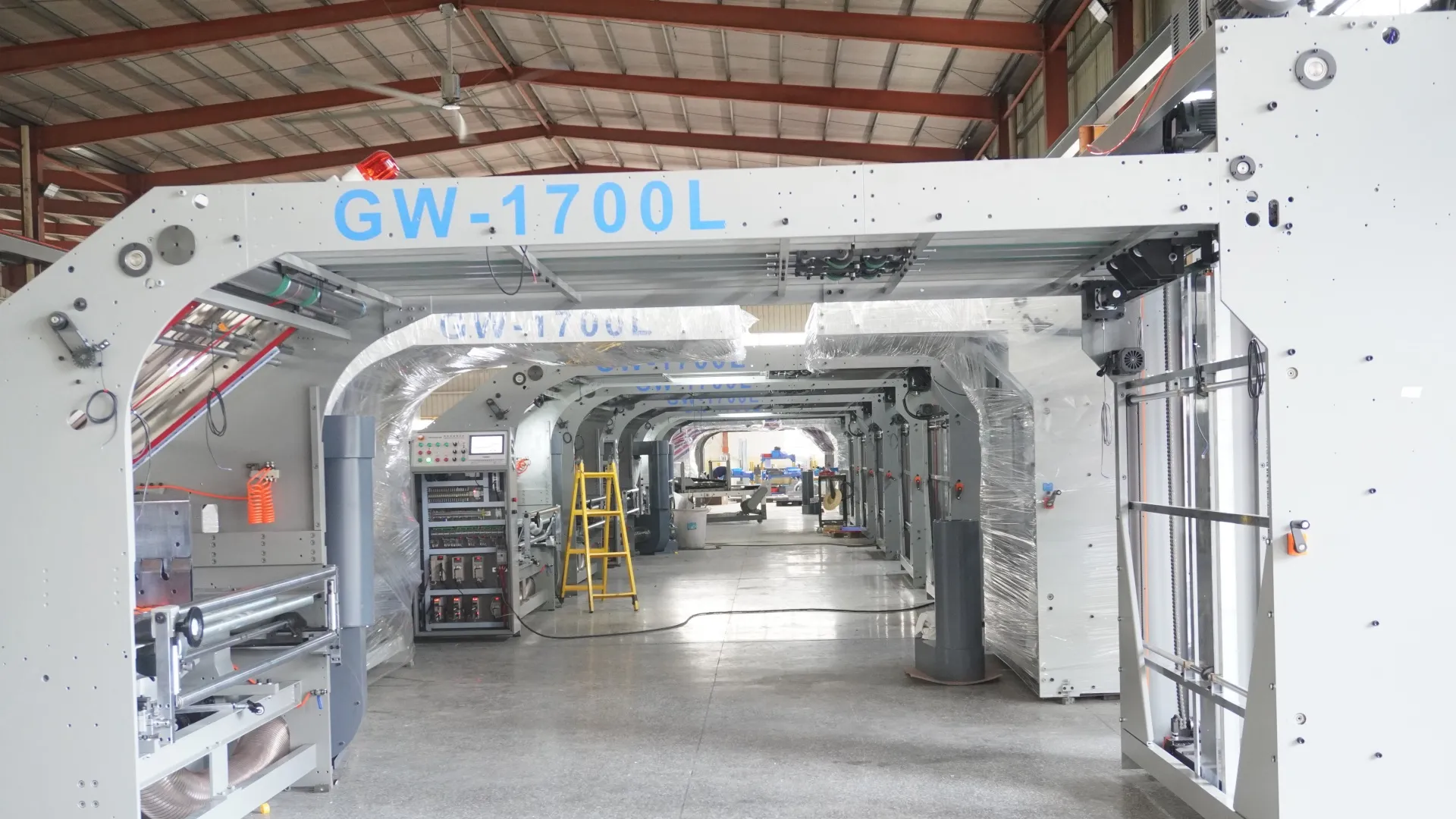
As a reference point, the Fengchi GW Series reports a maximum speed of 22,000 sheets/hour and a stable operating speed of approximately 16,000 sheets/hour (165 m/min), with lamination accuracy around ±1.0 mm under suitable production conditions. When comparing suppliers, ask for equivalent continuous-production data: stable speed, test materials, run length, operator count, and measured scrap.
Set a Lamination Accuracy Standard Before You Compare
Lamination accuracy, or registration, describes how precisely the printed sheet is positioned on the corrugated board. A tolerance such as ±1.0 mm means the printed sheet’s position can deviate by up to 1.0 mm from the target position, depending on where and how it is measured.
Poor registration creates visible and costly defects:
- Uneven margins
- Misaligned graphics
- Exposed corrugated board at the edge
- Incorrect folding positions
- Increased scrap
- Customer complaints and rework
For packaging serving retail and e-commerce brands, accuracy is often more important than raw speed, because a fast machine producing misregistered boards is not fast at all.
How to set your standard:
- Define the tolerance your customers and die-cutting process require, such as ±1.0 mm or tighter.
- State the tolerance in your purchase inquiry.
- Agree on how it will be measured: front and side registration, number of samples, and the point in the run.
- Include a verification run in the purchase agreement.
A practical accuracy check: run 50–100 sheets at the beginning, middle, and end of a continuous run; measure front and side margins with a caliper; then repeat the test after a speed change and after a format change.
Match the Machine to Your Board and Paper Range
Material compatibility determines whether the machine can laminate your existing orders and the new products you plan to sell.
Common corrugated flute types and typical applications:
| Flute | Typical board height | Typical use |
|---|---|---|
| A flute | ≈ 4.7–5.0 mm | Heavy shipping cases, high stacking strength |
| B flute | ≈ 2.5–3.0 mm | Transit packaging, die-cut and printed cartons |
| C flute | ≈ 3.5–4.0 mm | General shipping and retail packaging |
| E flute | ≈ 1.2–1.6 mm | Retail, food, and high-quality printed cartons |
| F flute | ≈ 0.6–0.9 mm | Very fine printed packaging, cosmetic and display boxes |
Flute heights vary by manufacturer, so verify the board you actually buy. What matters for selection is the full range the machine can process without reducing speed, accuracy, or output quality.
The Fengchi GW Series supports A, B, C, E, and F flute, as well as 3-ply, 5-ply, and 7-ply corrugated board. Its reported material range is approximately:
- Top paper: 120–700 g/m²
- Bottom board: from about 300 g/m² up to 10 mm thick
Before you buy, send the manufacturer your actual material specifications and, where possible, physical samples representing:
- Your thinnest paper
- Your thickest paper
- Your smallest format
- Your largest format
- Your most frequently produced board
- Your most difficult-to-laminate product
The most difficult product is often the one that reveals the machine’s real capability.
Feeding System: The Quiet Driver of Throughput and Quality
The feeder is the first point of contact between the machine and your materials. At high speed, an inconsistent feeder can cause sheet skew, double feeding, missed sheets, registration errors, and production interruptions.
Compare semi-automatic and automatic feeding honestly:
| Factor | Semi-automatic feeding | Automatic feeding |
|---|---|---|
| Operator role | Manual board loading and more intervention | Loading plus monitoring; fewer hands on the line |
| Labor requirement | Higher | Lower |
| Feeding stability at high speed | Depends on operator skill | More consistent, designed for continuous runs |
| Warped or difficult board | More sensitive to operator technique | Better control systems, still needs testing |
| Best fit | Lower volume, mixed short runs | High volume, long runs, 2–3 shifts |
For high-volume production, look for a stable belt or automatic feeding system designed for continuous operation. As an example, Fengchi’s GW-1450BP uses a leading belt feeder system with a maximum speed of 22,000 sheets/hour and stable production around 16,000 sheets/hour.
Questions to ask the manufacturer:
- How does the feeder handle different paper weights?
- Can it maintain registration at high speed?
- How quickly can operators adjust the feeding system?
- How does it perform with warped or difficult board?
- What happens when production runs continuously for several hours?
Glue Consumption: The Recurring Cost That Decides Your Margin
Adhesive is a recurring production cost, not a one-time purchase line. A machine that uses slightly more glue than necessary can erase its price advantage within a year or two.
Measure glue economics per sheet:
Annual glue cost = glue weight per sheet × annual sheets × glue price
Illustrative example using your own local numbers:
- Glue applied: 12 g per sheet
- Annual volume: 20,000,000 sheets
- Glue price: $0.50/kg
Annual glue cost = 0.012 kg × 20,000,000 × $0.50 = $120,000 per year.
If a more precise machine reduces glue consumption by 30%, that is about $36,000 in annual savings before considering waste and cleaning time. Even a 10% improvement matters at high volume.
Fengchi reports that its GW Series achieves approximately 30% glue savings depending on production conditions and the comparison baseline, with automatic glue and pressure adjustment on selected configurations.
When comparing machines, ask for:
- Glue consumption per 1,000 sheets or per square meter
- Glue application method and adjustment range
- Automatic glue and pressure control
- Glue recovery and cleaning system
- Drying requirements
- Waste produced during setup and cleaning
Energy Consumption: Measure Per 1,000 Sheets, Not Installed Power
Energy efficiency becomes significant when a machine runs thousands of hours per year. Compare energy per unit of output, not total installed power.
Annual electricity cost = typical operating power × operating hours × electricity price
Illustrative example:
- Operating power: 8 kW
- Operating hours: 5,000 per year
- Electricity price: $0.12/kWh
Annual electricity cost = 8 × 5,000 × $0.12 = $4,800 per year.
If one machine delivers 20% energy savings, that is about $960 per year in this example, plus a smaller carbon footprint. Fengchi reports approximately 20% energy savings and power consumption around 8 kW for its GW Series, depending on production conditions and the comparison baseline.
Ask suppliers to provide:
- Installed power
- Typical operating power
- Energy consumption per production hour
- Standby consumption
- Motor configuration
- Energy-saving functions
- Energy consumption per 1,000 sheets at stable speed
Automation, Labor, and Changeover Time
Automation reduces manual work, but its real value is consistency and utilization. A well-automated machine keeps feeding, glue application, pressure, registration, and format adjustment under control, which reduces operator fatigue and quality drift.
Automated functions worth comparing:
- Feeding
- Glue application
- Pressure adjustment
- Registration
- Format adjustment
- Production monitoring
Equally important is changeover time. A machine with excellent throughput but a 40-minute format change can lose its advantage in a factory running short mixed jobs. Ask:
- How long does a standard format change take?
- How many operators are required for changeover?
- Are changeovers assisted by presets or automatic adjustment?
- What is the typical setup time between jobs?
Do not evaluate automation only as headcount reduction. It also improves production consistency, operator productivity, setup efficiency, quality control, and machine utilization, which matters even when labor is cheap and plentiful.
Plan the Installation Before You Sign the Order
Many factories choose the right machine and then discover the wrong room. Installation readiness should be confirmed before purchase.
Verify:
- Floor space and planned machine footprint, including infeed and delivery clearance
- Floor load capacity and leveling requirements
- Electrical supply: voltage, phases, and circuit capacity
- Compressed-air supply and consumption, if required
- Access for delivery and rigging
- Operator and maintenance access around the machine
- Storage for paper, board, glue, and finished laminated stacks
- Ventilation, lighting, and safety requirements
Also plan for people and time:
- How many operators will be trained, and for how long?
- What is the typical installation and commissioning timeline?
- Is installation supervision included, and for how many days?
- What documentation, videos, and spare-parts kits are provided?
- What are the acceptance criteria for the commissioning run?
Commissioning timelines vary by machine type and site readiness. Ask the supplier to commit to a clear schedule and a signed acceptance test in the purchase agreement.
After-Sales Support, Spare Parts, and Warranty
A flute laminator is a production asset. If it stops for days waiting for a spare part or a technician, the lost output can cost more than the service contract.
Before buying, confirm:
| Service area | What to confirm |
|---|---|
| Technical support | Remote troubleshooting, video support, online commissioning |
| Installation | Installation guidance and supervision included |
| Training | Operator and maintenance training, with documentation |
| Spare parts | Critical spares availability and typical delivery time |
| Recommended stock | Suggested spare-parts inventory for your production level |
| Warranty | Coverage period, terms, and exclusions |
| Local service | Service center or partner in your country or region |
| Response time | Maximum response time for urgent breakdowns |
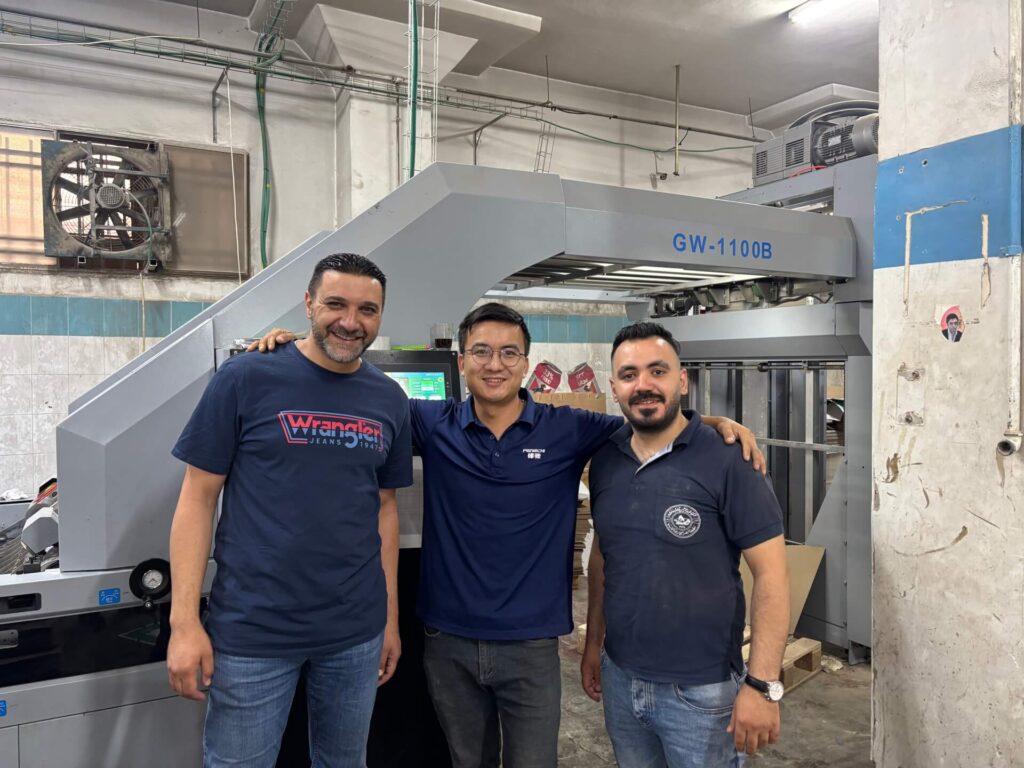
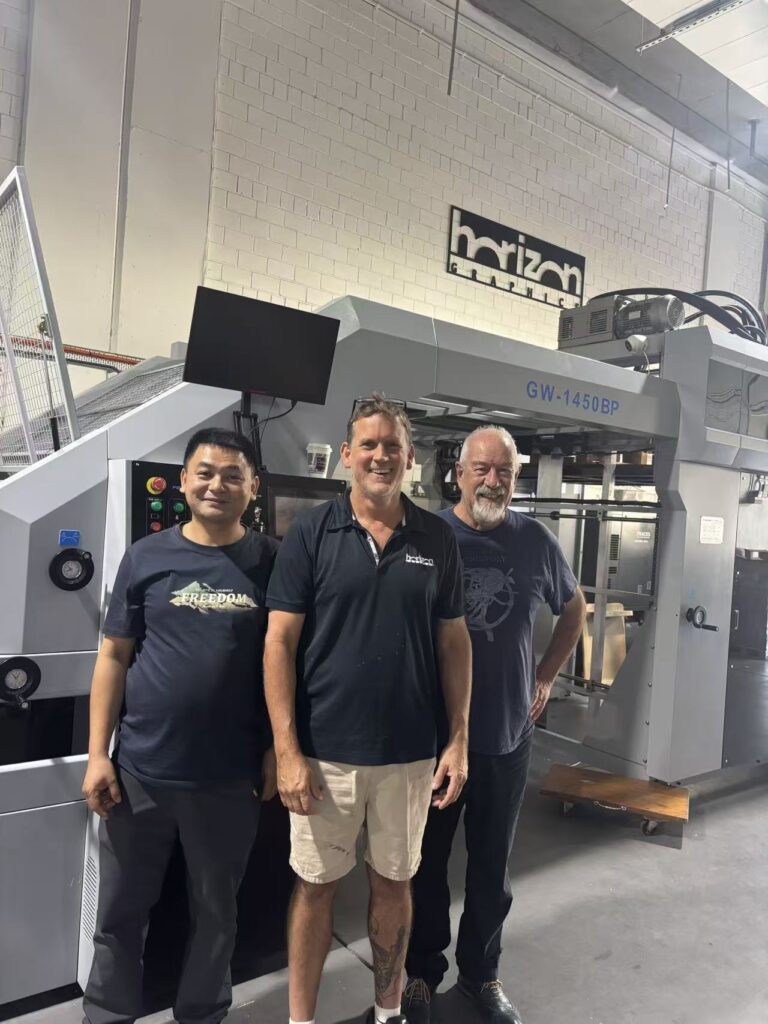
A manufacturer with a large international installation base is not automatically better, but it often has more experience handling different board grades, climates, operators, and local service conditions. As of April 2026, Fengchi reports 11 global service and support centers and machines installed in more than 60 countries.
Check the Manufacturer’s Track Record
A specification sheet is a promise; an installation record is evidence. Before you decide, investigate:
- Years of manufacturing experience
- Number of machines installed
- Export markets and local service coverage
- Customer references you can contact
- Certifications such as ISO 9001 and CE
- Patents and engineering documentation
- Installation cases similar to your production
- Technical support infrastructure
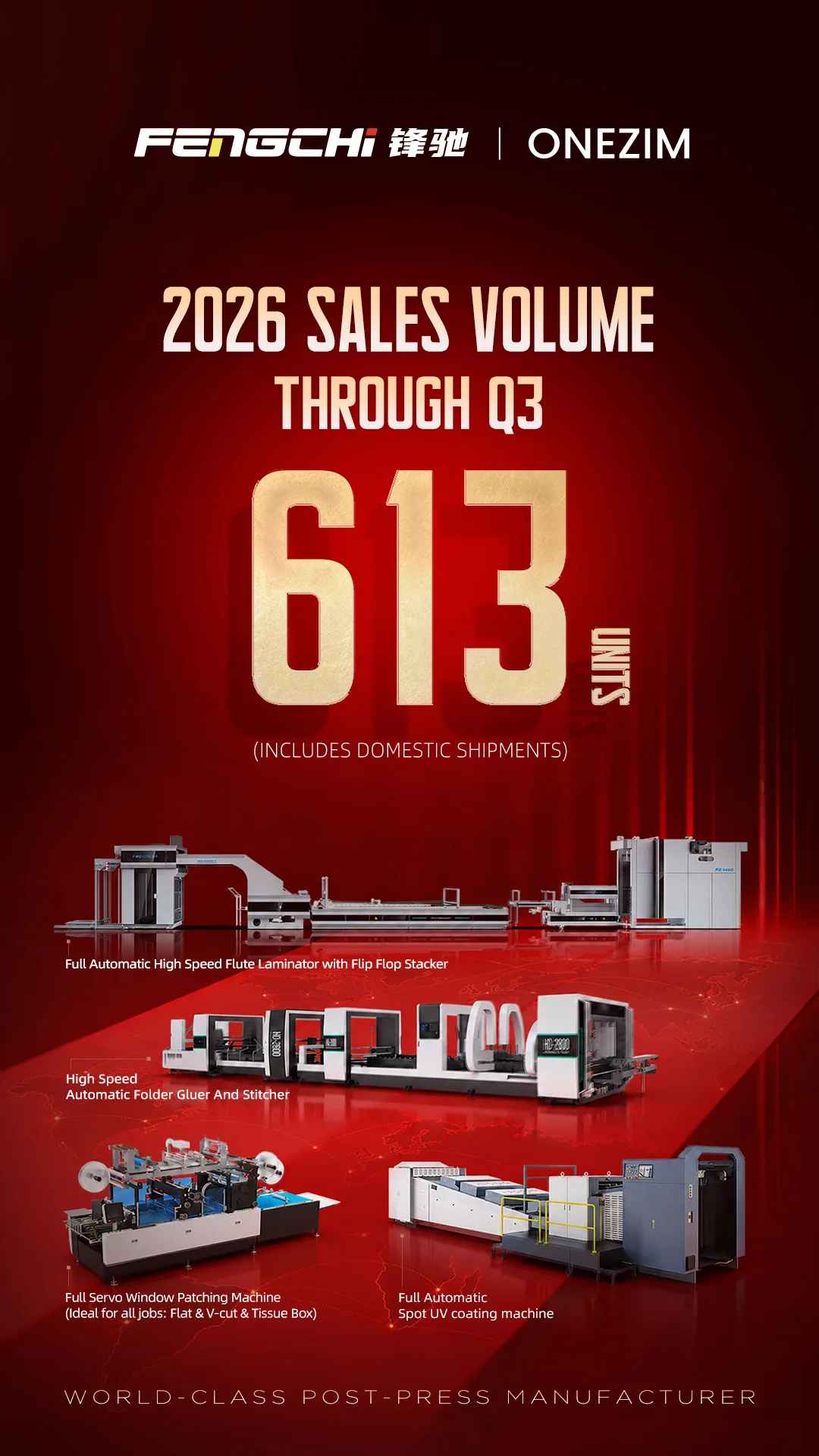
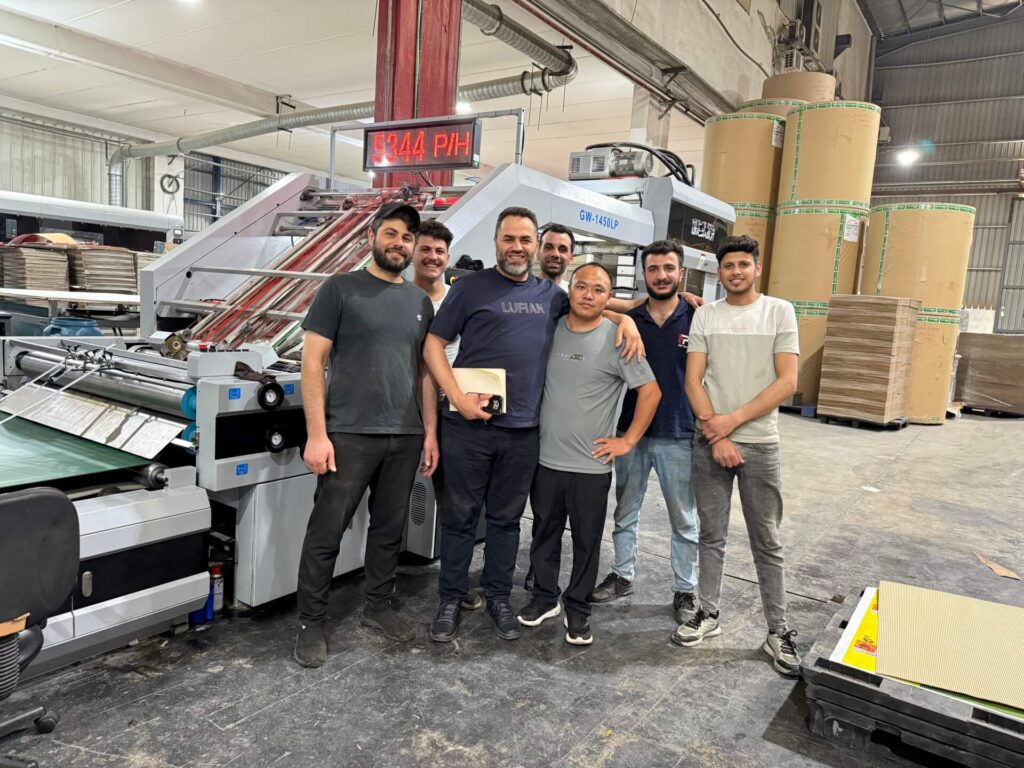
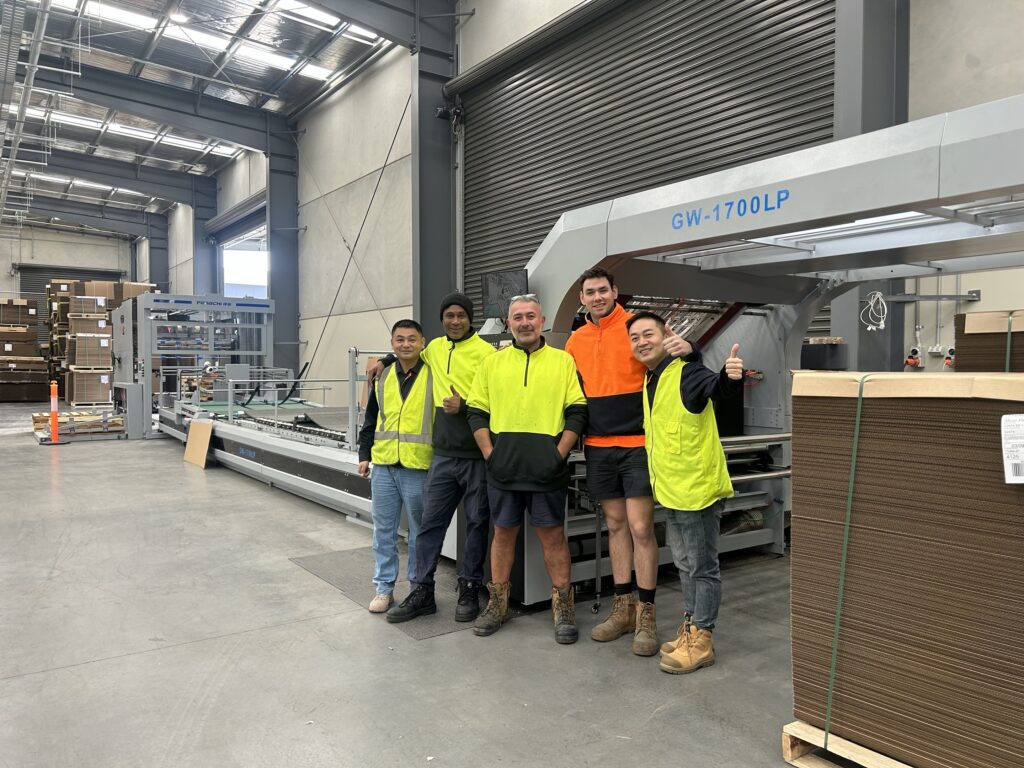
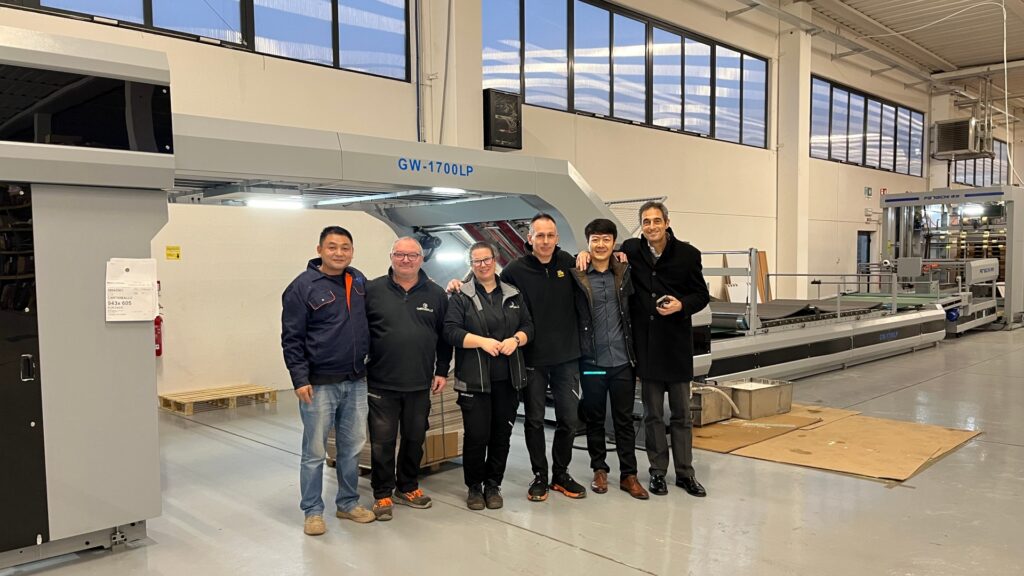
Fengchi was established in 2009, reports more than 16 years of experience, 50 patents, ISO 9001 and CE certifications, and an installation base of 5,000+ machines globally. Verify these figures with the supplier and, where possible, with a reference customer in a market similar to yours.
Watch a Real Machine and Test With Your Own Materials
Brochures and videos are useful, but a production demonstration with your own materials is the strongest evidence. If you cannot visit in person, ask for a supervised video test, recorded production data, and a reference visit.
Watch the machine in production for:
- Feeding stability
- Registration accuracy
- Glue application
- Operating speed
- Operator workflow
- Noise and vibration
- Board handling
- Delivery quality
Suggested test protocol:
| Test item | What to do | What to record |
|---|---|---|
| Materials | Use your actual top paper and corrugated board | Paper GSM, flute, ply, board thickness, format |
| Run length | Run continuously for at least 2–4 hours | Sheets produced, stops, jam count |
| Speed | Measure stable speed in real production | Sheets/hour, m/min |
| Accuracy | Sample every 30 minutes and measure margins | Front and side deviation, % within tolerance |
| Glue | Weigh glue usage for the run | g/sheet, kg per 1,000 sheets |
| Energy | Read the meter before and after | kWh per 1,000 sheets |
| Changeover | Change format and board once | Setup time, operators required |
| Quality | Inspect delivery stacks | Warping, double feed, scratches, waste |
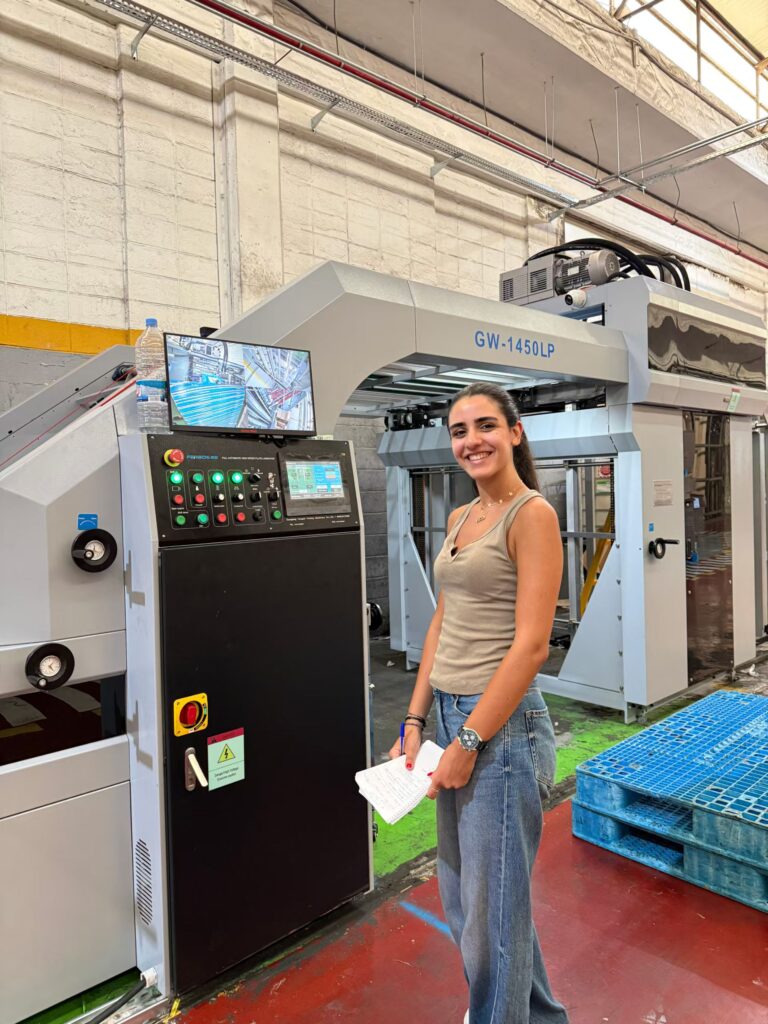
For a broader overview of available configurations, see the Flute Laminators range. You can also watch machine operation on the FENGCHI YouTube channel.
Calculate Total Cost of Ownership and ROI
The cheapest machine is rarely the most economical one. Total cost of ownership includes purchase price plus every recurring cost over the machine’s life:
TCO = purchase price + installation + labor + glue + electricity + maintenance + spare parts + downtime + scrap
Illustrative comparison at 20,000,000 sheets per year (make assumptions explicit in your own analysis):
| Cost factor | Machine A | Machine B |
|---|---|---|
| Purchase price | $90,000 | $120,000 |
| Stable speed | 12,000 sheets/hour | 16,000 sheets/hour |
| Operators | 3 | 2 |
| Operating power | 10 kW | 8 kW |
| Glue per sheet | 15 g | 10 g |
| Glue cost/year | $150,000 | $100,000 |
| Labor cost/year | $90,000 | $60,000 |
| Electricity/year | $6,000 | $4,800 |
| Annual recurring cost | $246,000 | $164,800 |
In this illustration, Machine B costs $30,000 more but saves about $81,200 per year in recurring costs, paying back the premium in less than six months, before considering the additional usable capacity from higher stable speed. Your numbers will differ; the point is to compare per-1,000-sheet cost, not purchase price.
Standard comparison metric:
Cost per 1,000 laminated sheets = (amortized machine cost + labor + glue + energy + maintenance + scrap) ÷ annual sheets × 1,000
A higher-priced machine may be the better investment if it provides higher stable production speed, better accuracy, lower glue consumption, lower energy consumption, less waste, fewer operators, and less downtime.
Match Capacity to Your Growth Plan
Do not buy only for today’s orders, and do not buy maximum capacity you cannot fill. The goal is optimal utilization over the machine’s life.
Ask:
- What will production volume look like in 3–5 years?
- Will average order size grow, or will runs get shorter?
- Will you add new flute types, board constructions, or formats?
- Can the machine’s speed and automation level support a second shift later?
If current volume is 80,000 sheets per day and demand is expected to double, a machine with stable capacity around 100,000 sheets per day may create a bottleneck within two years. A machine capable of 16,000 sheets/hour stable operation provides more headroom, but only if you have the orders and operating discipline to utilize it.
Common Mistakes Factory Owners Make
- Comparing maximum speed instead of stable speed
- Choosing on purchase price instead of cost per 1,000 sheets
- Skipping a test with their own board and paper
- Ignoring changeover and setup time
- Underestimating glue, energy, and waste costs
- Forgetting installation, power, and floor-space requirements
- Buying without confirming spare parts and local service
- Buying capacity the factory cannot fill
- Not including scrap and rework in ROI calculations
- Trusting marketing claims without reference customers
Final Selection Checklist
| Selection criteria | What to check |
|---|---|
| Production speed | Maximum and stable continuous speed, with evidence |
| Accuracy | Actual registration tolerance on your materials |
| Board compatibility | A/B/C/E/F flute |
| Board construction | 3/5/7-ply compatibility |
| Paper range | Minimum and maximum GSM |
| Board thickness | Maximum supported thickness |
| Feeding | Belt/automatic feeding stability |
| Glue system | Glue control and consumption per 1,000 sheets |
| Energy | Operating power and kWh per 1,000 sheets |
| Automation | Automatic adjustment, presets, monitoring |
| Format range | Maximum and minimum sheet size |
| Changeover | Setup time and operators required |
| Installation | Space, power, air, foundation, commissioning plan |
| Service | Installation, training, response time |
| Spare parts | Availability, delivery time, recommended stock |
| Warranty | Coverage and exclusions |
| Experience | Installation volume and export markets |
| Certification | ISO, CE, and other relevant marks |
| References | At least one verifiable customer case |
| ROI | Cost per 1,000 sheets and payback period |
Frequently Asked Questions
What is the most important factor when choosing a flute laminator?
There is no single universal factor. Evaluate production volume, stable operating speed, lamination accuracy, board compatibility, glue consumption, energy use, labor, automation, after-sales support, and total cost of ownership together, then weight them by your production profile.
What speed should a flute laminator have?
Match stable speed to your required good sheets per day. A machine advertised at 22,000 sheets/hour may have a practical continuous operating speed closer to 16,000 sheets/hour. Compare stable production speed, expected availability, and quality yield, not maximum speed alone.
How accurate should a flute laminator be?
Set the tolerance your products actually require. A benchmark such as ±1.0 mm is common for demanding packaging applications, but verify accuracy on your own materials, at your target speed, and throughout a continuous run rather than accepting a brochure figure.
How can I reduce the operating cost of a flute laminator?
Focus on glue consumption, energy use, labor, waste, setup time, and downtime. A higher-priced machine can produce a lower total cost of ownership if it reduces glue, energy, scrap, and operator requirements. Measure cost per 1,000 sheets rather than purchase price.
Should a small factory buy a high-speed flute laminator?
Not necessarily. A high-speed machine makes sense when its capacity will be utilized or when rapid growth is expected. Otherwise, a smaller configuration with lower acquisition cost and faster changeovers may deliver a better return.
What is the difference between a semi-automatic and an automatic flute laminator?
A semi-automatic machine requires more manual board loading and operator intervention, which suits lower-volume or mixed production. An automatic machine uses a belt or similar feeding system to maintain stable high-speed production with fewer operators, which suits continuous and multi-shift operation.
How long does installation and commissioning take?
Timelines depend on machine configuration, site readiness, and the supplier’s service team. A typical plan includes site preparation, installation, leveling, utility connection, operator training, and a signed acceptance run. Ask for a committed schedule in the purchase agreement.
What after-sales support should I expect?
Confirm remote troubleshooting, video and online commissioning, installation guidance, operator training, spare-parts availability and delivery time, warranty terms, local service coverage, and a defined response time for urgent breakdowns before you sign.
Final Thoughts
The right flute laminator is not the fastest or the cheapest machine. It is the machine that gives your factory the best combination of usable capacity, lamination accuracy, material compatibility, operating cost, automation, reliability, and technical support.
Before making a final decision, work through the seven steps at the top of this guide, complete the checklist, run a real test with your own materials, and compare cost per 1,000 sheets. For factories that process high volumes and need accurate, consistent lamination, a properly selected high-speed flute laminator can become a decisive competitive advantage.
Speak with a FENGCHI sales engineer to receive a customized solution for your requirements.
Learn how to evaluate machine speed, lamination accuracy, board compatibility, glue consumption, energy efficiency, automation, and ROI to select the best flute laminator for your packaging production needs.
Learn how to evaluate machine speed, lamination accuracy, board compatibility, glue consumption, energy efficiency, automation, and ROI to select the best flute laminator for your packaging production needs.
Learn how to evaluate machine speed, lamination accuracy, board compatibility, glue consumption, energy efficiency, automation, and ROI to select the best flute laminator for your packaging production needs.
Learn how to evaluate machine speed, lamination accuracy, board compatibility, glue consumption, energy efficiency, automation, and ROI to select the best flute laminator for your packaging production needs.
Learn how to evaluate machine speed, lamination accuracy, board compatibility, glue consumption, energy efficiency, automation, and ROI to select the best flute laminator for your packaging production needs.