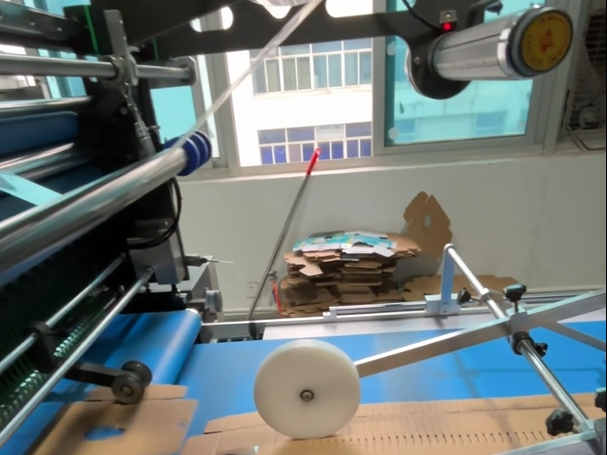
Ever unwrapped an online order and wondered how that cardboard box went from a flat sheet to a perfectly formed carton in seconds? The answer is a folder gluer — an easy-to-overlook machine that folds flat, die-cut board into the boxes protecting everything you buy.
In the past, boxes were folded and glued by hand. This was a slow, labour-intensive process with inconsistent results and a high risk of mistakes. The introduction of automatic folder gluers revolutionised this task, allowing packaging plants to handle growing volumes with greater speed, accuracy, and cost-effectiveness. Today’s folder gluers are faster and more precise than ever, making them essential equipment in corrugated box plants and folding carton factories around the world.
FENGCHI has spent more than 16 years designing, building, and installing high-performance post-press equipment. We’ve helped packaging companies across the globe streamline their box production, and in this guide, we’ll break down everything you need to know about folder gluers — from what they do to how they work behind the scenes.
What Does a Folder Gluer Do?
Before a box can hold anything, it starts life as a flat, die-cut sheet of board, complete with pre-scored fold lines and a glue flap. A folder gluer takes that flat blank and automatically folds it along its score lines, applies adhesive to the glue flap, and compresses the joint to form a sturdy, perfectly square box.
This eliminates the slow, error-prone manual folding and gluing that would otherwise bottleneck production. The result is significantly increased efficiency — and consistent, high-quality boxes — for businesses that package products in volume.
What Are Folder Gluers Used For?
Modern folder gluers are far more versatile than their simple description suggests. They handle everything from lightweight folding cartons to heavy multi-ply corrugated boxes, and many can be integrated into fully automated lines, fed by die-cutters upstream and connected to stackers and strappers downstream.
Here are two common applications:
- E-commerce & retail packaging: Millions of shipping boxes and retail cartons are produced on folder gluers every day. They handle food and beverage cartons, cosmetics and healthcare packaging, toy boxes, and consumer electronics cartons — at speeds manual workers could never match.
- Industrial & heavy-duty packaging: For larger, more demanding jobs — double-piece corrugated boxes for white goods, ventilated cartons for fruit and produce, and sturdy containers for hardware and industrial parts — high-capacity folder gluers deliver the strength and precision required.
What Components Go Inside a Folder Gluer?
There’s no one-size-fits-all configuration for a folder gluer, but they usually share the same base components:
- Feeder: Holds a pile of flat, die-cut blanks and feeds them into the machine one at a time. Advanced models use an independently controlled dual suction mechanism to keep feeding stable and accurate, even at top speed.
- Folding Section: Servo-driven mechanisms fold the blank along its pre-scored lines. Servo motor control means folding pressure is adjustable and every fold is consistent.
- Gluing Unit: Adhesive is applied precisely to the glue flap. High-quality machines offer both cold and hot glue application — hot glue for instant bonding, cold glue for corrosion-resistant, long-lasting joints — with servo-controlled alignment for accurate placement.
- Pressing & Stacking Section: The folded, glued blank passes through a compression section that sets the bond, then is counted and delivered in neat stacks, ready for the next stage of production.
How Do Folder Gluers Work?
Folder gluers come in many sizes and configurations, but they generally follow a similar workflow. Here’s a breakdown of how they operate:
- Flat, die-cut board blanks are loaded into the feeder at the front of the machine.
- The suction feeder separates and feeds a single blank into the conveying system.
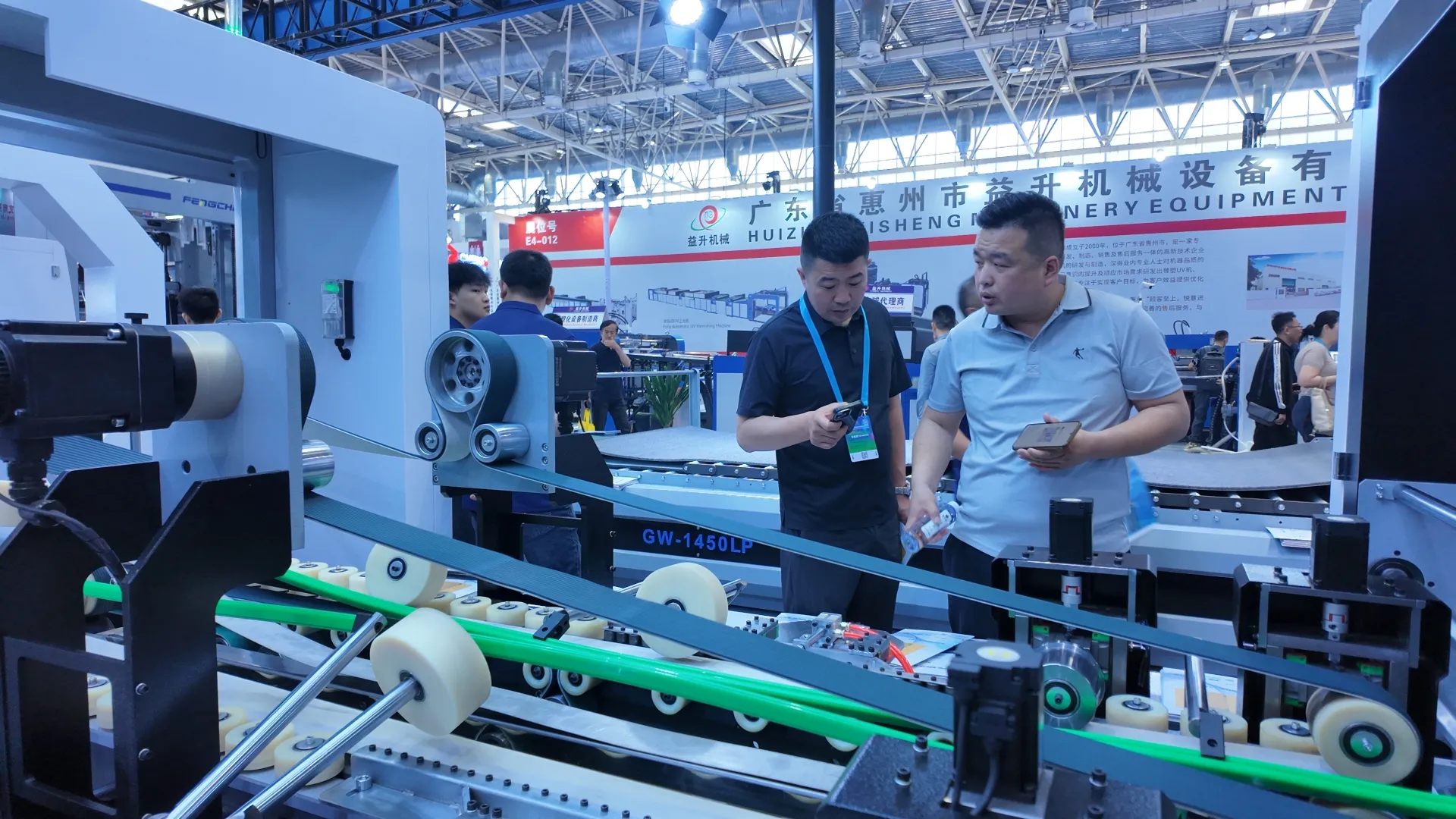
- The blank travels through the folding section, where belts fold it along its pre-scored lines.
- Glue is applied to the glue flap with precision, and the flap is folded over to form the joint.
- The finished blank passes through the pressing section to set the bond, then is counted and stacked at the delivery end.
Modern folder gluers are electronically controlled, letting operators programme different box sizes and styles at the touch of a button. FENGCHI’s folder gluers feature full-servo motion control, digital size adjustment with 5-second servo positioning, and real-time self-diagnostics that automatically lock and display faults on a digital screen — so you can switch jobs in just 3–5 minutes and keep production running smoothly.
FENGCHI: Trusted Manufacturer of High-Performance Folder Gluers
For more than 16 years, FENGCHI has specialised in the design and manufacture of post-press equipment. We engineer a complete range of folder gluers — including the FC Series for double-piece corrugated boxes and the HX Series for single-sheet corrugated boxes — plus automatic folder gluer and stitcher machines, built to handle projects of every size and complexity, all over the world.
Our machines are ISO9001 and CE certified, backed by more than 30 patents and trusted by packaging companies in over 60 countries. With 11 service and support centers and around 50 sales agents worldwide, our engineers are dedicated to providing the perfect solution — whether you need a single folder gluer or a fully integrated turnkey packaging line.
We also offer OEM/ODM customisation, tailoring machine width, speed, and features to your exact production requirements. And with a 12-month warranty and lifetime paid service, you can rely on us long after installation.
Ready to streamline your box production and achieve exceptional results? Request a quote online or contact the sales team at sales@laminatorfc.com — let’s discuss how FENGCHI can create the perfect folder gluing solution for your business.