The global corrugated packaging market reached $233.8 billion in 2024 and is projected to hit $380 billion by 2034, growing at a CAGR of 5%. For entrepreneurs and packaging professionals looking to capitalize on this growth, becoming a post-press equipment distributor offers a compelling business opportunity with high margins and recurring revenue streams.
This comprehensive guide walks you through everything you need to know — from understanding the market landscape to selecting the right manufacturing partner, building your business model, and scaling your distribution network.
The Post-Press Equipment Market in 2026
The post-press equipment market encompasses machinery used after the printing process — including flute laminators, folder gluers, window patchers, spot UV coaters, and stackers. These machines are essential for producing corrugated packaging, folding cartons, and premium printed packaging products.
Key Market Drivers
- E-commerce growth: Global e-commerce sales exceeding $6 trillion are driving demand for corrugated shipping packaging
- Sustainability trends: Brands shifting from plastic to paper-based packaging creates new equipment demand
- Automation push: Rising labor costs in manufacturing drive adoption of automatic and high-speed post-press equipment
- Premium packaging: The luxury and cosmetics sectors demand sophisticated finishing (spot UV, window patching)
- Regional manufacturing growth: Southeast Asia, Africa, and Latin America are seeing rapid packaging factory expansion
Market Size by Equipment Type
| Equipment Type | Market Share (2025) | Growth Rate |
|---|---|---|
| Flute Laminators / Litho Laminators | 38% | 4.5% CAGR |
| Folder Gluers | 22% | 3.8% CAGR |
| Window Patchers | 15% | 5.2% CAGR |
| Spot UV Coaters | 10% | 6.1% CAGR |
| Stackers and Other | 15% | 4.0% CAGR |
Why Become a Post-Press Equipment Distributor?
Distributing post-press equipment offers several advantages over other machinery distribution categories:
Recurring Revenue Streams
Unlike one-time product sales, post-press equipment generates multiple revenue touchpoints:
- Initial machine sale — Commission on each unit sold (typically 5-10%)
- Spare parts and consumables — Ongoing orders from installed machines
- Maintenance and service contracts — Annual or per-visit service revenue
- Installation and training fees — On-site commissioning and operator training
- Upgrades and retrofits — Existing customers upgrading to newer models
High Entry Barriers, Less Competition
The post-press equipment distribution business requires technical knowledge, industry connections, and after-sales service capability. These barriers mean that once established, distributors face significantly less competition than in general machinery trading.
Growing Market, Growing Customers
Your customers — corrugated box plants, printing houses, and packaging manufacturers — are themselves experiencing strong growth. As e-commerce and sustainable packaging drive demand, your customers will need to expand capacity, creating repeat purchase opportunities.
What Makes a Successful Post-Press Equipment Distributor?
Based on the profiles of FENGCHI most successful global partners, here are the characteristics that predict success:
Essential Qualities
- Industry knowledge: Understanding of corrugated packaging, printing processes, or paper converting
- Technical capability: Ability to handle basic machine installation, troubleshooting, and maintenance
- Local market access: Existing relationships with packaging manufacturers in your region
- Financial stability: Ability to purchase demo units or maintain inventory for quick delivery
- After-sales commitment: Willingness to provide ongoing local support to end customers
Business Backgrounds That Work Well
- Existing printing/packaging machinery distributors looking to expand their portfolio
- Printing company owners who understand the equipment from the user perspective
- Packaging industry consultants transitioning into equipment sales
- Industrial equipment sales professionals starting their own agency
How to Select the Right Manufacturing Partner
Choosing the right manufacturer to represent is the single most important decision you will make. Here is a systematic evaluation framework:
Evaluation Criteria
| Criterion | What to Look For | Weight |
|---|---|---|
| Product Quality | ISO certification, build quality, field reliability data | 25% |
| Product Range | Multiple machine types to cross-sell to same customers | 15% |
| Export Experience | Track record in international markets, export documentation | 20% |
| After-Sales Support | Spare parts availability, technical documentation, remote support | 20% |
| Marketing Support | Sales materials, showroom support, trade show participation | 10% |
| Territory Protection | Clear distributor agreements with exclusive or protected territories | 10% |
Red Flags to Watch For
- No after-sales support infrastructure for international clients
- Unwilling to provide factory training for your technical team
- Poor quality control or frequent machine defects reported by other distributors
- No clear spare parts supply chain or long lead times for parts
- Ambiguous distributor agreements with no territory protection
Distribution Business Models
Model A: Commission-Based Agent (Low Risk, Low Investment)
You introduce customers to the manufacturer and earn a commission on each sale. The manufacturer handles installation, service, and warranty directly.
- Investment: Minimal (marketing and travel costs)
- Commission: Typically 5-10% of machine value
- Best for: New entrants testing the market
Model B: Value-Added Reseller (Medium Investment)
You purchase machines at distributor pricing, handle local installation, provide after-sales service, and manage the customer relationship end-to-end.
- Investment: Working capital for inventory plus service team
- Margin: Typically 10-15% per machine
- Best for: Established businesses with service capability
Model C: Exclusive Regional Partner (Highest Potential)
You secure exclusive rights to represent the manufacturer in your country or region. You maintain demo machines, a service center, and a spare parts warehouse.
- Investment: Significant (showroom, spare parts, service team)
- Margin: 15-20% plus service revenue plus parts sales
- Best for: Companies with established market presence and capital
Step-by-Step: Starting Your Distribution Business
Step 1: Market Research (Weeks 1-4)
- Identify the top 20 packaging manufacturers in your country or region
- Research their current equipment and pain points
- Analyze competitors already active in your market
- Estimate market size: how many flute laminators, folder gluers, etc. are sold annually in your region
Step 2: Partner Evaluation (Weeks 3-6)
- Shortlist 3-5 potential manufacturing partners using the evaluation framework above
- Request references from existing distributors in other markets
- Visit the factory (in-person or virtual tour) to assess manufacturing capability
- Negotiate distributor agreement terms
Step 3: Business Setup (Weeks 6-10)
- Register your company (if not already operating)
- Set up a professional website and marketing materials
- Arrange factory training for your technical team (typically 1-2 weeks)
- Establish spare parts inventory plan
Step 4: Market Entry (Weeks 8-16)
- Host a product launch event or attend a local packaging trade show
- Conduct targeted outreach to your top 20 prospect list
- Offer demonstration and trial programs to early adopters
- Collect and publish first customer testimonials
Step 5: Scale (Months 4-12)
- Build a local service team with factory-trained technicians
- Expand your product portfolio within the manufacturer lineup
- Develop recurring revenue through service contracts and spare parts
- Hire additional sales staff to cover more territory
Marketing Your Post-Press Equipment Business
Digital Presence
- Website: Create a professional website showcasing the machines you represent, with technical specifications, videos, and case studies
- LinkedIn: Build a network of packaging industry professionals in your region
- YouTube: Publish machine demonstration videos and installation case studies
- Local SEO: Optimize for searches like “flute laminator [your country]” and “packaging machinery [your city]”
Offline Marketing
- Exhibit at local and regional packaging trade shows
- Host factory visits for key potential customers (arrange with your manufacturing partner)
- Print professional catalogs in local language
- Offer free technical seminars on corrugated packaging optimization
Profitability and Revenue Projections
Conservatively speaking, a new distributor in a mid-sized market is expected to sell 3–5 machines in the first year; 8–12 machines in the second year; and 15–25 machines in the third year. Generally speaking, the more machines sold, the higher the machine value, and the greater the commissions/profits plus revenue from spare parts and services. Specific results vary depending on market size, pricing, and business model. For more details, please consult the machine manufacturer.
Why Partner with a Chinese Manufacturer
Chinese post-press equipment manufacturers have become the preferred supply source for distributors globally. Here is why:
Cost Advantage
Chinese-built machines typically cost 40-60% less than European equivalents (e.g., Bobst) while delivering comparable performance, speed, and precision. This price advantage allows distributors to offer compelling value propositions to cost-conscious packaging manufacturers.
Technology Parity
Leading Chinese manufacturers like FENGCHI now utilize full-servo systems, PLC controls with touchscreen interfaces, and precision machined components that match international quality standards. The technology gap has narrowed dramatically over the past decade.
Customization Willingness
Chinese manufacturers are typically more willing to customize machines for specific market needs — whether that means modifying sheet sizes for local substrates, adding specific safety features for regional regulations, or creating special coating configurations.
Export Infrastructure
Established Chinese exporters have streamlined logistics, customs documentation, and international payment processes. They understand the documentation requirements for different regions and can arrange shipping, insurance, and customs clearance support.
The FENGCHI Distributor Opportunity
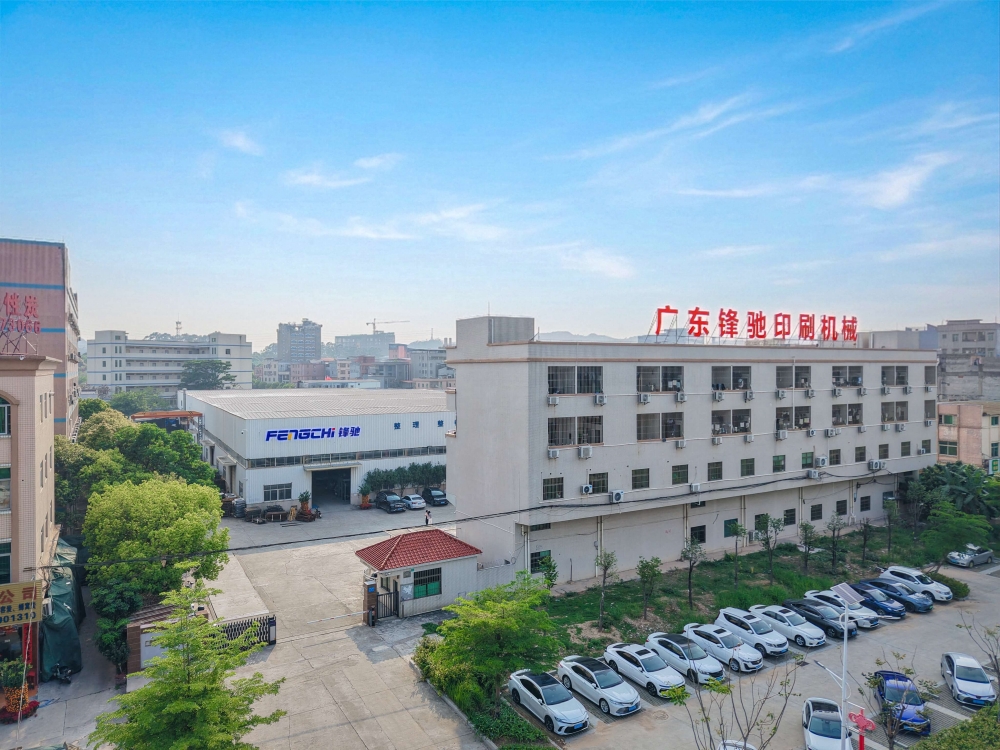
FENGCHI (Guangdong Fengchi Printing Machinery) is a leading Chinese manufacturer of post-press equipment with over 5,000 machines installed across 60+ countries. With 11 global service centers, ISO 9001 certification, and a 50,000 sqm manufacturing facility, FENGCHI offers a complete partnership package for serious distributors.
What FENGCHI Offers Distributors
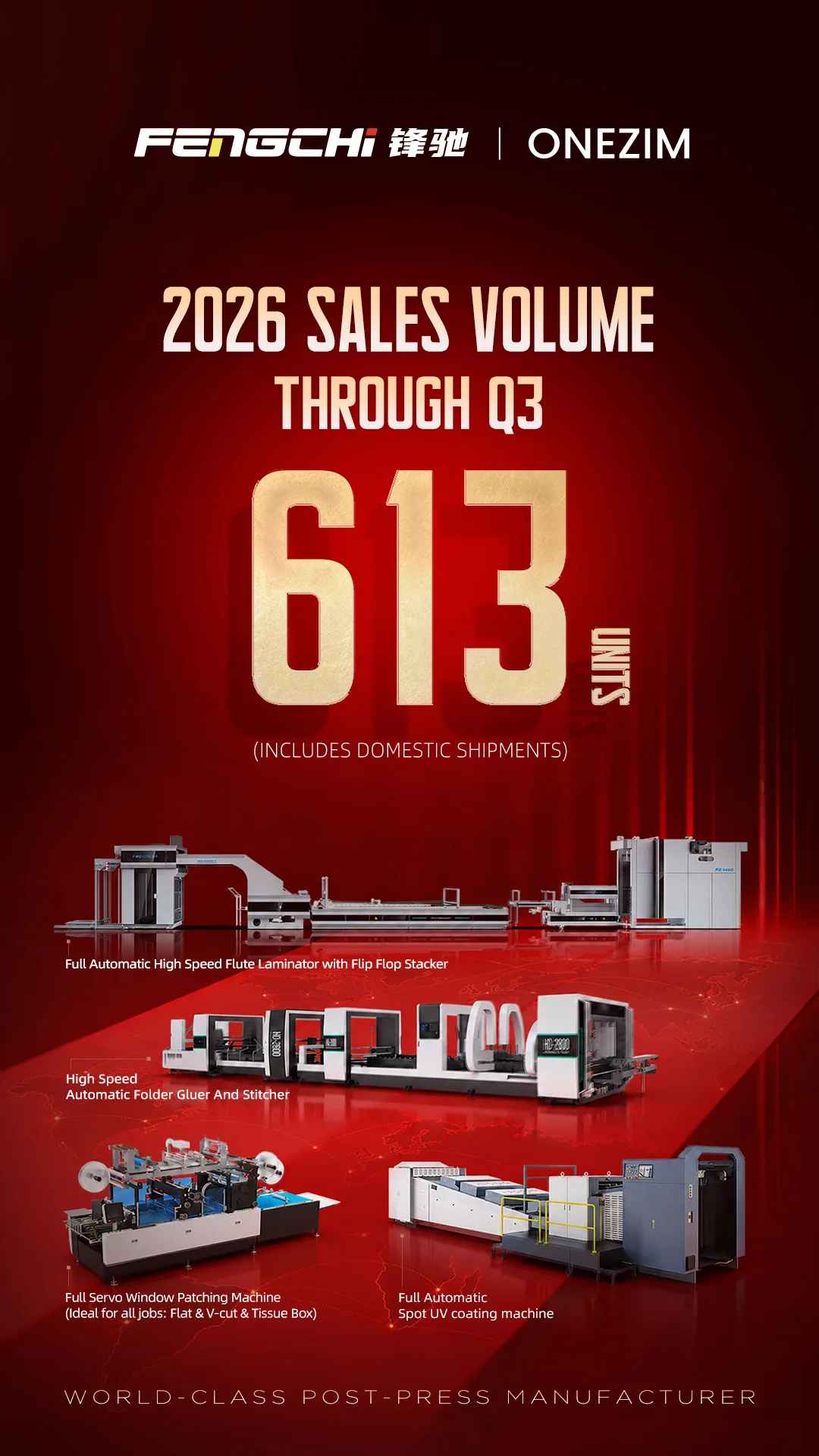
- Complete product range: Flute laminators (5 series), window patchers (3 models), folder gluers (2 series), spot UV coaters (2 series), flip-flop stackers (2 models), and cardboard laminators (2 models)
- Territory protection: Exclusive or semi-exclusive agreements for qualified partners
- Factory training: Comprehensive technical training at the Dongguan facility
- Sales support: Marketing materials, product catalogs, and digital assets in multiple languages
- After-sales infrastructure: Remote diagnostics support, spare parts supply, and technical documentation
- Trade show support: Co-exhibition opportunities at major global packaging trade shows
Current Priority Markets for Distributor Recruitment
- Southeast Asia: Indonesia, Thailand, Philippines
- Latin America: Mexico, Brazil, Colombia, Peru, Chile
- Africa: Nigeria, Kenya, Ethiopia, South Africa
- Middle East: Saudi Arabia, UAE, Iraq, Jordan
- South Asia: Bangladesh, Pakistan, Sri Lanka
- Eastern Europe: Poland, Romania
- Northern Europe: Norway, Switzerland, Sweden, Denmark
Learn more about becoming a FENGCHI sales agent
Frequently Asked Questions
How much capital do I need to start a post-press equipment distribution business?
You can start as a commission-based agent with minimal investment (mostly marketing and travel costs). For a value-added reseller model, plan for $50,000-$200,000 in working capital depending on your target machine types and territory size.
Do I need technical experience to become a distributor?
While not strictly required, technical knowledge is a significant advantage. Most successful distributors have either a technical background or employ at least one experienced technician. FENGCHI provides comprehensive factory training for all new distributor partners.
How profitable is becoming a post-press equipment distributor?
Profitability depends on your market, sales volume, and service capabilities. In addition to equipment sales, many distributors generate recurring revenue from spare parts, maintenance services, and future equipment upgrades.
How long does it take to close the first machine sale?
The sales cycle for post-press equipment typically ranges from 3 to 9 months. First sales often take longer as you build credibility and a track record. Once you have reference installations in your market, the cycle shortens significantly.
Does FENGCHI provide exclusive territories?
Yes, FENGCHI offers exclusive and semi-exclusive distribution agreements for qualified partners. Territory scope and exclusivity terms are negotiated based on market potential and the partner commitment level.
What after-sales support does FENGCHI provide to end customers?
FENGCHI provides remote diagnostics, technical documentation, spare parts supply, and in some cases on-site installation support through our network of 11 global service centers. Distributors receive priority access to our technical support team.
Ready to Become a FENGCHI Distributor?
If you are interested in representing FENGCHI products in your market, we would like to hear from you. Our distributor recruitment team can provide detailed information about:
- Product portfolio and pricing for distributors
- Territory availability in your region
- Distributor agreement terms and conditions
- Training and support programs
Apply to Become a FENGCHI Distributor
Or contact our distributor relations team:
Email: sales@laminatorfc.com
Phone: +86-13316603290
Learn how to become a successful post-press equipment distributor in 2026. Discover investment requirements, profit opportunities, manufacturer selection, and how to partner with FENGCHI.